
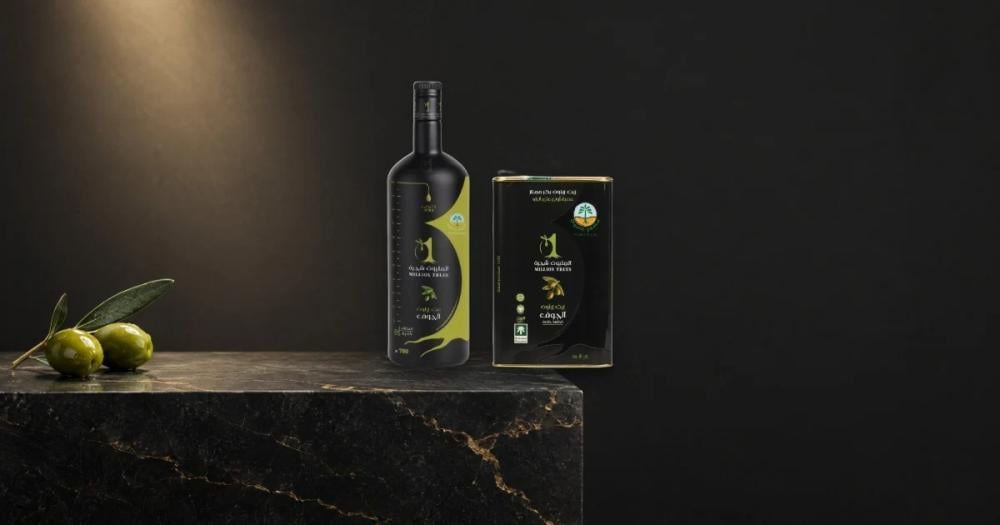
The phrase "first cold-pressed" appears on almost every bottle of olive oil on the market, from the finest to the cheapest on the shelf. With its widespread use, consumers have come to assume it's a mark of quality and compare bottles based on it, without knowing what "first-pressed" means in today's presses, or what "cold" means in terms of Celsius.
This guide begins with stone mills and ancient presses, then explains how modern oil presses operate using two-phase and three-phase systems, the precise European definition of the term, the effect of kneading temperature and duration, the importance of the time between harvesting and pressing, and the difference between filtered and unfiltered oil. Finally, it includes a table clarifying what each label term includes and excludes, and a list of things you should actually look for.
In short: Modern oil mills extract virgin olive oil in a single press using centrifugation; there is no such thing as a "second pressing" of virgin olive oil, and the term "first pressing" is a relic of the past. According to European regulations, "cold pressed" means the oil was extracted at a temperature below 27°C. However, this label alone does not guarantee that the oil is extra virgin or fresh; what matters most are the oil grade, harvest season, and certificate of analysis.
From the stone mill to the press: Where did the first pressing come from?
Olive oil has been extracted for thousands of years in the Mediterranean basin and the Levant using almost the same method: grinding and then pressing. In the first stage, the fruit, with its pit, is crushed under a heavy stone millstone rotating on a stone base, powered in the past by animals and later by engines, until it becomes a paste. In the second stage, the paste is spread on round fiber mats stacked on top of each other, then pressed, causing a mixture of oil and vegetable water to seep out. This mixture is left in basins until the oil rises to the surface, where it is collected.
Initially, oil presses were operated by levers and weights, then by massive wooden screws. In the 20th century, hydraulic presses, which exerted much greater pressure, became widespread. In these systems, the first pressing had real significance: the initial pressure on the pulp yielded the best oil. Some presses would then re-press the pulp after mixing it with hot water to extract the remaining oil, resulting in a second, lower-quality oil. Therefore, the "first pressing" became synonymous with quality, and the term "cold pressing" distinguished it from pressings using hot water.
However, traditional presses have drawbacks well known to those in the oil mills: the process is intermittent and slow, the paste is exposed to air for a long time, and the mats are difficult to clean completely between batches, retaining residues of paste that may ferment and transfer their defects to the next batch of oil. Hence the shift to continuous systems.
How do modern conservatories work?

In a modern olive press, the olives pass through a continuous line of four stations:
- Cleaning and washing: Vacuum the leaves and branches, then wash the fruit to remove dust and dirt.
- Grinding: A metal crusher with hammers or discs turns the fruit and its pits into a paste within seconds. Some mills still use stone mills for those who prefer a softer flavor.
- Malaxation: Stirring the dough slowly in closed basins until the small oil droplets coalesce into larger droplets that are easier to separate.
- Centrifugal separation: In a horizontal device called a decanter that rotates at high speed, the components are separated according to their density: the heavier pulp towards the outside and the lighter oil towards the inside. The oil then usually passes through a vertical centrifuge that removes any remaining water and fine impurities.
Three-phase system
This system has been widespread since the 1970s. Water is added to the paste to facilitate separation, and the decanter yields three products: oil, vegetable water, and relatively dry pulp. Its drawback is that the added water washes away some of the soluble polyphenols, resulting in a less bitter and pungent oil. It also produces large quantities of wastewater that are difficult to dispose of environmentally.
Two-phase system
Developed in Spain in the 1990s to reduce wastewater consumption, this method requires little to no added water. It yields only two products: oil and a moist pulp that combines plant water with the peel and pits. Because the pulp is not washed away by water, the oil retains a higher percentage of polyphenols and a more intense flavor, making it the dominant system in many producing countries today.
The following table compares the three methods in terms of the points that actually affect the oil that reaches your kitchen.
| Comparison point | traditional press | Three-phase centrifuge | Two-phase centrifuge |
| Separation method | Press the dough onto mats, then drain the oil. | Horizontal decanter rotating at high speed | Horizontal decanter rotating at high speed |
| Add water | A little, and hot water may be added in subsequent presses. | A large amount of water is added to the dough. | No water is added, or very little is added. |
| Products | Vegetable oil, water, and pulp | Vegetable oil and water, and relatively dry pulp | Oil and wet pulp only |
| Air exposure and cleanliness | Prolonged exposure to air and mats that are difficult to clean | Enclosed line, easy to clean | Enclosed line, easy to clean |
| Effect on taste and polyphenols | Good if the press is very clean, and prone to fermentation defects | Loss of some polyphenols with water | Higher percentage of polyphenols and a sharper taste |
| production capacity | Limited and intermittent | High and continuous | High and continuous with less wastewater |
Oil quality is not determined by technology alone. A clean press that squeezes fresh fruit may outperform a decanter that squeezes fruit that has waited for days, but continuous systems make it easier for the press to maintain quality batch after batch.
First pressing and cold extraction in today's mills

In a decanter, virgin olive oil is extracted in a single pass, and the pulp is not returned to the machine for a second extraction of virgin olive oil. The oil remaining in the pomace is not mechanically extracted but is sent to pomace oil mills where it is solvent-extracted and then refined. This oil cannot be called virgin olive oil. In other words, all virgin olive oil on the market today is necessarily "first pressing," and the term "extra virgin" adds no new information. The boundaries of this category and what distinguishes it from others can be found in the guide to the differences between extra virgin, virgin, and refined olive oil .
precise European definition
The EU regulations for the marketing of olive oil (Regulation 29/2012, whose provisions were transferred to Delegated Regulation 2022/2104) strictly regulate these expressions, and only allow them for extra virgin and virgin olive oil:
- "First cold pressing": Oil extracted at a temperature below 27 degrees Celsius, from a first mechanical pressing of the paste, using a traditional extraction system based on hydraulic presses.
- "Cold extraction": Oil extracted at a temperature below 27 degrees Celsius, by filtration or centrifugation of the olive paste.
This means that, according to this definition, Decanter oil is entitled to be labeled "cold-pressed" rather than "first cold-pressed." Outside the European Union, not all markets adhere to this distinction, and many labels translate "cold-pressed" as a general description, not as proof of anything without certification or clear information from the producer.
Why 27 degrees specifically?
Heat increases the amount of oil extracted because it reduces its viscosity and helps the droplets clump together, but at the same time it expels volatile aromatic compounds and accelerates oxidation. A temperature of 27 degrees Celsius is considered a reasonable compromise between yield and flavor, and quality-conscious mills often operate at lower temperatures.
Kneading: Equating time and heat
The kneading stage is where a large part of the oil's character is determined, and where the real choice between quantity and quality is made. During grinding and kneading, enzymes in the fruit produce the green aromatic compounds responsible for the scent of cut grass and tomato leaves, while other enzymes, in the presence of oxygen, oxidize some of the polyphenols.
- Temperature: Every increase in dough temperature slightly increases yield, but it weakens the fresh aroma and accelerates oxidation. Therefore, kneading vats in good mills are usually set between 20 and 27 degrees Celsius, while mills focused on quantity raise them to over 30 degrees.
- Duration: Usually between 20 and 45 minutes. Short kneading preserves freshness but leaves more oil in the pulp, while long kneading increases yield and reduces polyphenols and aromas.
- Oxygen: Modern presses use closed tanks, and some fill the space above the paste with an inert gas such as nitrogen to reduce the oxidation of polyphenols.
The condition of the olives also plays a role in this equation: early green olives are difficult to extract and yield a low percentage, tempting the press to raise the temperature or prolong the pressing process. The product that accepts a lower yield to preserve the flavor is the one that produces the sharp oils of the early harvest.
Hours between picking and pressing

All of the above loses its value if the olives arrive at the press damaged. Olives, after being picked, remain alive, breathing, and warming; any wound opens the door to enzymes and fungi, causing acidity to rise and fermentation to begin. We have explained this chemistry in detail in the guide to olive oil acidity .
- Targeted time: Pressing within 24 hours of picking is the standard followed in presses that are keen on quality, and ideally on the same day.
- Method of transport: Ventilated plastic boxes with few layers, not stacked bags that press against each other and trap heat.
- Sorting: Separating the fallen and damaged fruits from the fruits picked from the tree, and squeezing each separately.
- Ambient temperature: Picking in the early morning and protecting the fruits from the sun before the afternoon. This is aided by the moderate weather in autumn and the beginning of winter in areas such as Al-Jawf.
Practical advice: Ask the producer about the time between picking and pressing before you ask him about the "first pressing," as the answer to the first question tells you much more about the quality of the oil.
Filtered or unfiltered
The oil coming out of the centrifuge contains tiny water droplets and small particles of fruit pulp, giving it a slightly cloudy appearance. Some producers sell it as is, as "unfiltered" oil, at the beginning of the season, and many people like it for its fresh look and taste. Others let it settle in tanks and then extract the clear oil from the sediment, or they pass it through filters before bottling.
The problem is that water and sediment in unfiltered oil provide a suitable environment for enzyme and microorganism activity. If the oil remains on top of these sediments for months, it may develop the defect of "sludge buildup" and its acidity will begin to rise slowly. Therefore:
- Unfiltered oil is suitable for consumption within a few months of pressing, and should be stored in a cool, dark place.
- Oil that has been filtered or precipitated is more stable in the longer term, and filtration does not mean that it has lost its quality.
- Turbidity is not proof of authenticity, and clarity is not proof of refinement.
What the label's wording includes and what it doesn't include
After all that, the packaging phrases can be read realistically, and the following table summarizes the most common phrases associated with the method of era and production.
| The phrase on the sticker | What it means | What it does not guarantee |
| First cold squeeze | According to the European definition: a hydraulic press and a temperature below 27 degrees. | The grade and freshness are not guaranteed, and for use outside Europe is a general description. |
| cold extraction | Centrifugation or filtration at a temperature below 27 degrees | Neither the safety of the fruit nor the speed of its juicing is guaranteed. |
| extra virgin olive oil | The highest category with chemical limits and formal taste | The pressing date is not guaranteed; the oil may be from a previous season. |
| Unfiltered | It did not pass through filters before filling | Quality is not guaranteed, and faster consumption is required. |
| early harvest | Olives picked green at the beginning of the season | The category is not defined unless explicitly stated, and its meaning varies between producers. |
| Packaged in a specific country | Oil filling only | It does not mean that the olives were grown or pressed in the same country. |
| organic | Cultivation according to the requirements of an organic farming certification body | It does not specify the category, the style, or the freshness. |
Each of these statements answers only one question, and therefore none of them alone is sufficient. It is useful for them to be combined on the package with a certificate of analysis confirming them.
What are you really looking for?
- Official category name: Extra Virgin Olive Oil.
- Harvest season or harvest date, not just the expiration date.
- Country of origin and agricultural region, preferably the name of the farm or press.
- A recent certificate of analysis that includes sensory evaluation, and can be matched with the batch number.
- A light-protective container, dark glass or a metal can, and we have compared them in the guide to choosing olive oil in glass or a can .
- A clean, fruity taste with a balanced bitterness and tang when tasting.
Oil of a million trees from Al-Jawf

Our Million Trees Olive Oil comes from our farms in the Al-Jawf region, one of the largest olive-growing areas in the Kingdom, boasting millions of trees. The harvest there extends from autumn to early winter, when the mild weather ensures the olives reach the press in excellent condition. You can learn more about the characteristics of this region in the Al-Jawf Olive Oil Guide .
The Certifications and Awards page showcases our organic farming certification from the Ministry of Environment, Water and Agriculture, our Saudi Food and Drug Authority license, ISO 22000 and HACCP certifications, and our international awards, including the gold medal at the 2024 Dubai International Olive Oil Competition in the Ultra Premium category. You can find our Al-Jawf olive oil in metal cans ranging from 1 to 16 liters, and our dark glass bottles in 100 to 750 ml in the Glass section . We also offer our special harvest line in cans and dark glass.
Frequently Asked Questions
Is all extra virgin olive oil cold-pressed?
Not necessarily according to the European definition, as extra virgin requires mechanical extraction under thermal conditions that do not alter the oil, without specifying a particular 27 degrees. However, in practice, higher temperatures weaken the flavor and make it more difficult to pass formal tastings, which is why most good extra virgin presses operate below this limit.
Does a stone mill produce better oil than a metal crusher?
The mill typically yields a smoother, less bitter oil because it crushes the fruit more gently, while a metal crusher produces an oil richer in polyphenols and more pungent. However, the mill is slower and exposes the pulp to air for a longer period, so the best option depends on the desired flavor and the cleanliness of the press.
What does the term "first pressing" mean on centrifugally pressed oil?
This is a conventional description that adds no new information, because centrifugation extracts virgin oil in a single pass. According to European regulations, the more accurate term for this oil is "cold-pressed."
Is unfiltered oil better?
It is neither better nor worse by nature. It is a fresh oil that contains fine particles of the fruit, pleasant in the first few weeks after pressing, but less stable with long-term storage, so if you buy it, consume it within a few months.
How do I find out the pressing temperature for a specific oil?
It cannot be determined from the oil itself at home. Ask the producer about it directly, and look at the results of the analysis and taste test. Oil that was pressed at high temperatures loses its fresh aroma, and this is evident in the sensory evaluation.
Will early harvesting change the way we press oil?
Early green olives are more difficult to extract and yield less oil, but the resulting oil is greener, more bitter, and more pungent. A press that wants to preserve this flavor will accept the lower yield and not increase the kneading temperature to compensate.
The phrase "first cold-pressed" carries a long history of mills and presses, but today it's just one of many descriptions and not enough on its own to judge the oil. What makes good oil is wholesome fruit that arrives at the press within hours, moderately heated pressing, and storage that protects it from air and light. Look for these details on the packaging and in the certificate of analysis, and you'll understand what's behind the phrase.