
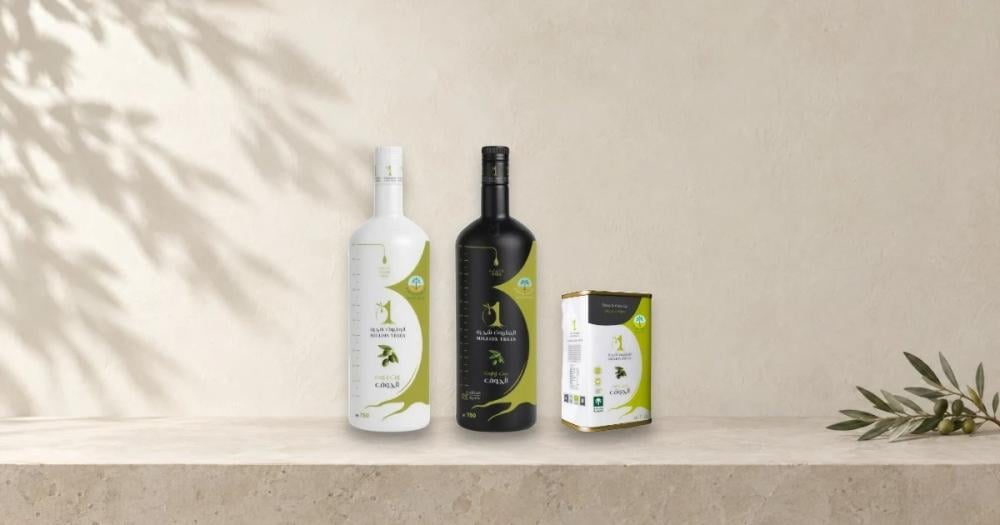
On the oil shelf, you'll find bottles labeled "Extra Virgin," "Pure Olive Oil," "Light," and "Pollen Olive Oil." The price difference between the cheapest and most expensive can be double or more. They all bear an image of an olive branch, making it difficult to know what you're actually paying for, and whether the cheaper option serves the same purpose.
This guide explains the categories of olive oil as defined by the International Olive Council, one by one: how each type is produced, its acidity and peroxide limits, the requirements of official tasting, and how the labeling commonly found in Saudi shops translates into an accurate classification. Finally, it explains which oils are best for salads and which are best for cooking and frying.
In summary: Extra virgin olive oil is the highest category. It's purely mechanically extracted olive oil with an acidity level of no more than 0.8% and no apparent taste defects. Virgin olive oil is permitted up to 2% acidity and with minor taste defects. Refined olive oil has undergone chemical and thermal processing to remove its defects, resulting in a loss of flavor and most of its natural compounds. Bottles labeled "Pure," "Pure," or "Light" are often a mixture predominantly made with refined olive oil. For raw consumption, choose extra virgin olive oil, which is also suitable for regular home cooking.
Virgin oils: four grades of olive oil

The most important reference for classifying olive oil is the International Olive Council's (IOC) trade standard, an intergovernmental body comprising most producing countries, and which is followed by European regulations (Delegated Regulation 2022/2104). The standard divides oils into two distinct categories: virgin oils, extracted from the fruit solely by mechanical or physical means, without solvents or refining, and under thermal conditions that do not alter the oil's properties; and oils that have undergone refining or are extracted from the pressing residue.
Virgin oil is essentially fruit juice, but it can come out excellent or poor depending on the quality of the fruit, the speed of pressing it, and the cleanliness of the press. Therefore, it is divided into four grades.
Extra Virgin
This is the oil that passes both tests: chemical and sensory. Chemically, its free acidity does not exceed 0.80 grams per 100 grams of oleic acid, and its peroxide value does not exceed 20 milliequivalents of oxygen per kilogram, with precise limits for ultraviolet absorption (K232 up to 2.50, K270 up to 0.22). Sensory, the median of defects, as determined by the tasting committee, must be zero, and the median of fruitiness must be greater than zero, meaning the aroma of fresh olives without any defects.
Virgin
Oil extracted using the same method, but less pure: its acidity is as low as 2.0%, and the tasting committee accepts minor imperfections with an average score not exceeding 3.5 on a ten-point scale, provided it retains a noticeable fruitiness. It is often oil pressed from fruit that was not transported properly, or excellent oil that has aged and lost some of its freshness. It is suitable for eating and cooking, but less flavorful and less pure.
Ordinary Virgin
This category is recognized by the International Olive Council but not by European regulations as a category for consumer sale. Its acidity is up to 3.3%, and it allows for more pronounced defects with a median of up to 6. It is rarely found under this name on Saudi Arabian shelves.
Lampante
Its name is derived from lamps, as it was historically used as fuel for lighting. It is virgin in its extraction, but its acidity exceeds 3.3% according to the International Council standard (and 2% according to European regulations), or it exhibits significant defects such as fermentation, mold, and rancidity. This oil is not suitable for direct consumption; its natural place is in refineries, where it is used to produce refined oil.
Refined and blended oils and pomace oil

The defective oil that is not suitable for consumption is not thrown away, but rather enters the refining line, which is a completely different industry from the current one, similar to what happens to seed oils.
Refined olive oil
The oil undergoes three main stages: neutralization with an alkaline solution to remove free fatty acids, bleaching with special clays or activated carbon to remove color, and deodorization with steam under vacuum at temperatures exceeding 200°C. The resulting oil has an acidity of no more than 0.30% and a peroxide number no higher than 5, figures that appear "better" than extra virgin olive oil, but it is almost odorless and tasteless, having lost most of the polyphenols and aromatic compounds that characterize olive oil. Therefore, low acidity alone does not guarantee good quality oil, a point we elaborate on in our guide to olive oil acidity and how to interpret its number .
Olive oil (refined with virgin)
Refined oil alone is too pale to sell, so it is mixed with a percentage of virgin oil to give it a lighter color and flavor. The resulting product is what the standard calls "olive oil" without any further specifications. Its acidity does not exceed 1.00%, and its peroxide value is up to 15. The percentage of virgin oil is not specified by the standard and is rarely mentioned on the packaging. This is the type of oil sold in stores under names like "pure," "classic," and "light."
Olive pomace oil
After pressing, the pomace remains, a mixture of peel, pulp, and pits, retaining a small percentage of oil that is not mechanically extracted. This residue is extracted using a chemical solvent (mostly hexane), producing crude pomace oil, which is refined in the same way and then mixed with a small amount of virgin olive oil to be sold as "olive pomace oil." International standards prohibit calling it simply "olive oil" and require the word "pomace" to appear on the label.
The following table brings together the seven categories in one place, with the upper limit for acidity according to the International Olive Council standard.
| Category | Extraction method | Upper limit of acidity | Taste and proper use |
| extra virgin olive oil | A purely mechanical era of wholesome fruits | 0.80% with zero flaws in the official taste test | Clearly fruity with a balanced bitterness and tang, perfect for salads, dipping, and cooking. |
| virgin olive oil | purely mechanical age | 2.0% with minor, acceptable defects | Lighter fruity flavors that may exhibit an unclean tone, suitable for everyday cooking. |
| Extra virgin olive oil | purely mechanical age | 3.3% with obvious defects | A tiring taste and noticeable flaws, and it's rarely found on shelves under its name. |
| Virgin kerosene (Lampanti) | Mechanical pressing of damaged or fermented fruit | More than 3.3% or major defects | Inedible, sent to refining |
| refined olive oil | Chemical and thermal refining of fuel oil | 0.30% after acid removal | Almost tasteless and odorless, a raw material for mixtures |
| Olive oil (refined with virgin) | Mixing the refined with an unspecified proportion of the virgin | 1.00% | Light and neutral, for frying and baking when you don't want the olive flavor. |
| olive pomace oil | Solvent extraction from the residue, then refining and blending | 1.00% | Completely neutral, for deep frying and commercial use |
Note that the acidity number decreases as the oil gets further away from the fruit, because refining removes free acids. Therefore, the category cannot be judged by the acidity number alone without knowing the extraction method and the result of the taste.
Sensory testing: The condition that numbers don't reveal

Many people mistakenly believe that extra virgin olive oil can be identified solely by its acidity level, but the truth is that international standards require formal tasting as much as chemical analysis. An oil with an acidity of 0.3% may fail to pass through because it has a slight fermentation defect.
The test is conducted according to the International Olive Council's methodology before a panel of 8 to 12 trained and certified tasters. The oil is served in a colored glass, often blue, to ensure the judgment is not influenced by color, and is warmed to approximately 28 degrees Celsius. Each taster records the intensity of each characteristic on a scale of zero to ten, and then the median, not the average, is calculated.
Positive qualities
- Fruity: The smell of fresh, whole olives, which may be green (cut grass, tomato leaves, artichokes) or ripe (apples, almonds, bananas).
- Bitterness: A taste felt at the back of the tongue, most pronounced in oil pressed from early-picked green fruits.
- Stinging: A tingling sensation in the throat after swallowing, caused by natural phenolic compounds in fresh oil.
Most common defects
- Fermentation (Fusty): The smell of olives that were left piled up for days before pressing and fermented, and it is the most famous defect.
- Mold (Musty): From fruits that were stored in moisture and fungi grew on them.
- Rancidity: The smell of old fats or oxidized nuts, which appears in oil that has aged or been stored in heat and light.
- Sludge deposits: from unfiltered oil that has remained on top of its deposits for a long time.
The criteria for extra virgin olive oil are explicit: the median defect value is zero, and the median fruitiness value is greater than zero. Any defect agreed upon by a majority of tasters disqualifies the oil from this category, regardless of its chemical ratings.
Taste and smoking point: What's happening in your kitchen
How to distinguish between categories by tasting at home
Place a teaspoon of oil in a small cup, warm it in your palm for a minute, then smell and taste it, and inhale a little air along with it. Good extra virgin oil fills the nose with a distinct vegetable or fruity aroma, leaving a bitterness and tang that gradually fades. Refined and blended oils are barely perceptible and have a neutral, oily taste. Impure oil smells of dirt, vinegar, or old nuts. Don't rely on color; both green and golden oils can be excellent or poor quality.
The point of smoking: between reality and common perception
It's commonly believed that extra virgin oil isn't suitable for cooking because of its low smoke point. In reality, the smoke point depends primarily on the percentage of free fatty acids: the lower the acidity, the higher the smoke point. This is why refined oil has a higher smoke point than virgin oil. Published smoke point figures vary considerably between sources and measurement methods, so don't judge cooking oil based on a single number. Sautéing onions and garlic, or regular home frying, doesn't require high temperatures to make even good extra virgin oil smoke, as long as you keep an eye on the pan.
More important than the smoking point is the oil's stability against oxidation when heated. Olive oil is rich in monounsaturated oleic acid, which is more stable than the polyunsaturated fatty acids prevalent in many seed oils, and the polyphenols in extra virgin olive oil further slow its oxidation. Therefore, you can sauté onions for kabsa, fry eggs, or brown chicken in extra virgin olive oil, provided you don't let it smoke.
Price logic: Why does a premium virgin cost more?
The price of premium virgin reflects the true cost at each stage:
- Yield: A liter of oil usually requires between five and eight kilograms of olives, depending on the variety and degree of ripeness. Early green olives produce less oil and a richer flavor, thus increasing the price per liter.
- Speed: Maintaining zero defects means careful picking and transporting to the press within hours, not piling up the fruit for days until the truckload is complete.
- Sorting: Fruits that have fallen to the ground and are infested with olive flies are discarded, and this reduces the quantity.
- Testing and storage: Laboratory analysis and tasting, then closed tanks away from heat and oxygen.
In contrast, refined oil is made from used olive oil purchased cheaply, and pomace oil is extracted from waste that would otherwise be discarded, so naturally, their prices are much lower. If you find "extra virgin" olive oil at the price of corn oil, there's likely a problem. For comparison, a liter of Million Trees olive oil cost 72 riyals including tax at the time of writing, and this price may change with promotions. If you want to learn about common adulteration methods and how to detect them, refer to the guide on distinguishing between genuine and adulterated olive oil .
The slogans on stickers in Saudi shops and what they mean
The brand names on the shelves don't always match the official category names, and some are misleadingly translated. The rule: look for the official category name on the ingredients label or in the small line under the brand name, not in the large text on the front of the package.
The following table shows the most common phrases and the categories they actually correspond to.
| The phrase on the package | The real category mostly | What you should pay attention to |
| Extra Virgin Olive Oil | Top class, purely mechanical era | Check the harvest season and country of origin; the category alone does not guarantee freshness. |
| Virgin Olive Oil | Virgin category with acidity up to 2% | Natural oil, but of lower quality, and obviously cheaper. |
| Pure Olive Oil | A mixture of refined with a percentage of virgin | The word "pure" does not mean purer than virgin, but is a translation of a trade name. |
| Light or Extra Light | Refined mixture with a lower virgin content, usually | It's lighter in color and taste only, and has the same calories as any other oil. |
| Classic / Classic or Original | Often a mixture of refined and virgin | Read the small line under the name; some companies name the firstborn. |
| Olive pomace oil | Solvent-extracted oil then refined | Suitable for commercial frying, but does not impart any olive flavor. |
| Olive oil with vegetable oils / Blend | A mixture of olive oil and seed oils | Check the percentage of olive oil in the ingredients; it may be too small. |
The further the phrase is from the word "virgin," the more likely it is that the oil is refined or mixed.
Which oil do you buy for what use?
Distribute the oils according to what happens to the oil in the dish:
- Raw foods and dips: fattoush and tabbouleh, hummus and baba ghanoush, ful medames, za'atar with bread, labneh. Here, oil is a key ingredient, so choose extra virgin, fresh, and early-harvested if you like a sharp, green flavor.
- Daily cooking: Sauté onions for Kabsa and broth, cooked vegetables, eggs, rice. Premium virgin rice is perfectly suitable; you can choose a larger, more economical package, while keeping a small, fresh package for salads.
- Deep-frying: Potatoes, samosas, and dumplings. Premium virgin flour holds up well but is expensive here; batter is an acceptable option for saving money.
- Baking and desserts: When you don't want the flavor of olives, a light, neutral oil, or a mildly flavored extra virgin olive oil from ripe fruit, is suitable.
Whichever you choose, remember that extra virgin olive oil loses its freshness over time, heat, and light. Buy enough to consume within a few months of opening, and store it away from the stove, as explained in the guide to storing olive oil at home . If you're comparing bottles labeled "first cold-pressed," also read up on what "first cold-pressed" actually means .
From the million-tree farms in Al-Jawf

Our Million Trees Olive Oil comes from our farms in Al-Jawf, a region that boasts over 23 million olive trees, according to the Saudi Press Agency (2024). We cultivate our trees using a modern, intensive planting system in straight rows running from north to south. We harvest the olives mechanically and transport them directly to our on-site press, where the oil is cold-pressed using centrifugal force. Our Certifications and Awards page showcases our Organic Agriculture Certificate from the Ministry of Environment, Water and Agriculture, our Saudi Food and Drug Authority license, our ISO 22000 and HACCP certifications, and our international awards, including the Gold Medal at the 2024 Dubai International Olive Oil Competition in the Ultra Premium category.
You can find metal cans ranging from 1 to 16 liters in the Al-Jawf olive oil section , and dark glass bottles ranging from 100 to 750 ml in the glass section , as well as a special selection of cans and dark glass bottles. For everyday cooking for a large family, the larger cans are more economical.
Frequently Asked Questions
Is "pure" olive oil better than extra virgin olive oil?
No. The word "pure" is a translation of the trade name Pure, and it often refers to a blend of refined oil and a percentage of virgin oil. It is inferior to extra virgin in flavor and natural compounds, even if its listed acidity is low.
Does "Light" mean that the oil has fewer calories?
No. All oils contain roughly the same number of calories, about 9 calories per gram. The lightness in color and taste is due to the oil being highly refined.
Can extra virgin olive oil be used for frying?
Yes. Good quality virgin olive oil can withstand normal home frying as long as you don't let it smoke, and it's resistant to oxidation thanks to oleic acid and polyphenols. The real consideration in deep frying is cost.
How do I know the oil category if the label doesn't clearly state it?
If you don't find the words "extra virgin" or "virgin" explicitly stated in the product name or ingredients label, treat it as a blend or duplicate. You can request a recent certificate of analysis for the same batch.
Why does the taste of premium virgin wine differ from one brand to another?
Because the category determines the minimum quality, not the flavor. The variety, degree of ripeness, region, and method of pressing all change the taste: early fruits produce a sharp, green oil, while ripe ones produce a smoother oil.
What happens to a pristine virgin animal if it gets old?
It gradually loses its fresh flavor, oxidation levels rise, and it may eventually become rancid, effectively ceasing to be considered extra virgin even if its acidity remains unchanged. Therefore, check the harvest season, if any, and consume any opened packages within a few months.
The difference between the different grades lies in what happens to the olives between the tree and the container: healthy olives and a quick pressing yield excellent extra virgin olive oil, while damaged olives followed by refining produce neutral oil with attractive specifications. Next time you're at the shelf, look for the official grade name, the harvest season, and a published certificate of analysis, and you'll know exactly what you're paying for.