
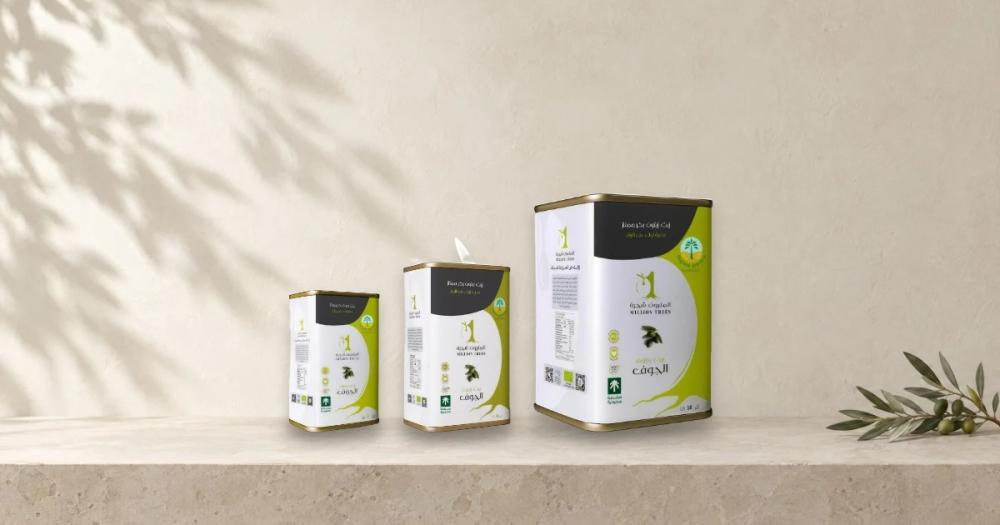
A 16-liter tin of olive oil seems like the smartest buy on paper: the price per liter is about half that of a small can, and it should last a household for months. But many families open the tin in winter, only to find that by summer the oil has lost its green aroma and tasted bland, saving money but sacrificing quality. It's not just about "bigger is cheaper," but also about how much your household actually uses and how you'll store the oil after opening it.
After reading this guide, you will be able to calculate the true price per liter for each size, estimate your monthly household consumption in a simple way, choose the size that you finish before its taste deteriorates, apply the emptying method used by farmers with large tanks, and know the cases in which buying 16 liters becomes a losing decision.
In short: The price per liter has dropped from 72 riyals for a one-liter can to 37.25 riyals for a 16-liter tin, based on prices at the time of writing. Opened oil retains its best flavor for approximately one to three months, so choose a size that you'll finish within that timeframe, or empty the tin immediately after opening it into smaller, filled containers. Large families who cook daily are the primary beneficiaries of the 16-liter size, while a couple would find a 2- or 4-liter tin more suitable.
The actual price per liter in each size

The first step in this comparison is to divide the price per unit by its volume in liters, as the total price alone can be misleading. The following prices for the "Million Trees" line include VAT as of the time of writing (October 2026). The price of a 16-liter can is a promotional price (pre-discounted price 825 riyals), and prices may vary depending on promotions. The comparison in the last column assumes you purchased the same quantity in one-liter cans at 72 riyals per can.
| Package size | Price includes tax | Price per liter | Savings compared to liter cans |
| 1 liter can | 72 riyals | 72 riyals per liter | Comparison point, no provision |
| 2 liter can | 135 riyals | 67.50 riyals per liter | 9 riyals (approximately 6%) |
| 4 liter can | 235 riyals | 58.75 riyals per liter | 53 riyals (approximately 18%) |
| 8-liter can | 450 riyals | 56.25 riyals per liter | 126 riyals (approximately 22%) |
| 16-liter can | 596 riyals | 37.25 riyals per liter | 556 riyals (approximately 48%) |
The table shows that the biggest jump in savings occurs when switching to 16 liters, while the difference between 4 and 8 liters is relatively small (only 2.50 riyals per liter). This means that someone who does not need 16 liters may be satisfied with a 4-liter can without losing much.
Note also that this saving is calculated assuming you consume every drop at its full quality. If you have to use the last four liters of the can for frying simply because it no longer tastes good for salads, then part of the benefit is lost. Therefore, in the following sections, we will calculate the other side of the equation: the rate of consumption.
What happens to the oil after the container is opened?
Olive oil stored in an opaque container and kept away from heat retains its quality for a long time, which is why most companies place a "best before" date 18 to 24 months after bottling. However, the moment it's opened, the situation changes, because oxygen enters the space above the oil's surface and begins to react with the unsaturated fatty acids, especially oleic and linoleic acids.
The air gap is the biggest problem in the tin can.
In a one-liter container, the air space after a week of use is small, and the oil will soon be consumed. However, in a 16-liter tin, the air space above the oil expands with each pour. When the tin is half full, there are about eight liters of air above the oil, which is refreshed every time the lid is opened. This air accelerates oxidation, causing the aromatic compounds that give the oil its grassy, green apple scent to diminish, and a waxy, nutty aroma begins to emerge.
How long does open-faced oil last?
There's no single fixed number, as the rate of storage depends on kitchen temperature, storage space, and the type of oil. Our farm's general rule is this: opened oil retains its best flavor for one to three months and remains usable for cooking even longer if properly stored. However, the difference in taste becomes noticeable in salads, hummus, and za'atar. In a hot Saudi kitchen, or near a stove, this period is significantly shorter. For complete details on heat, light, and refrigeration, refer to our guide on how to store olive oil at home .
How to estimate your household's monthly energy consumption

Most people don't know how many liters they consume per month, so they buy based on estimation. The easiest way to estimate is to monitor a single container: note the date it was opened and its expiration date, then divide the capacity by the number of weeks. If you don't have this information, use the following approximate calculation:
- A tablespoon of oil is equivalent to about 15 ml, meaning that a liter contains about 66 tablespoons.
- A salad serving four people usually requires two to three spoonfuls.
- A plate of hummus or fava beans for breakfast needs one to two spoonfuls on top.
- Sautéing onions for a kabsa or broth for an average family may require three to five tablespoons.
- Deep frying consumes much larger quantities, and it is preferable to use cheaper oil or olive oil from an economy line.
The numbers in the following examples are practical estimates based on these quantities, not statistics, and your house may differ from them up or down.
A couple who cook a few times a week
If a couple eats za'atar and olive oil or labneh for breakfast, and cooks four or five times a week with a daily salad, their consumption will typically be between 0.75 and 1.5 liters per month. A 16-liter can will then last in the house for about a year or more, which is much longer than the window for optimal flavor. A 2-liter can, or a 4-liter can if they use the vacuum method, would be more suitable.
A family of five
A family that cooks a main meal daily, adding oil to beans, chickpeas, and salad, typically consumes between two and four liters of oil per month. An 8-liter can will last them two to four months, and a 16-liter can four to eight months. The 8-liter can is the safest option, while the 16-liter can is suitable if emptied immediately after opening or shared with someone.
An extended family cooks daily
A household with grandparents, children, and grandchildren, where they cook kabsa or stew every day and receive guests at the weekend, might consume five to eight liters or more of water per month. Here, a 16-liter can is gone in two to three months, within the comfort of a window, and the savings of nearly half the price become a real gain.
The following table combines these estimates with the size we recommend for each type of house.
| House type | Approximate monthly consumption | Suggested size | Practical observation |
| A person living alone | From half a liter to approximately one liter | 1 liter can or 750 ml bottle | The larger size loses its flavor before it's finished. |
| two spouses | From 0.75 to 1.5 liters | 2 liter or 4 liter can | A 4-liter can needs to be emptied into bottles. |
| A family of five | From 2 to 4 liters | 8-liter can | 16 liters is possible with draining or division |
| An extended family cooks daily | From 5 to 8 liters or more | 16-liter can | It ends in two or three months with good quality |
| Two families share a tin can | From 2 to 4 liters per family | 16-liter can, divided by day of opening | Each family gets the cheapest price per liter |
The rule summarized by the table: Divide the container capacity by your monthly consumption. If the result is more than approximately three months and you will not be emptying or dividing the oil, then choose the next smaller size.
Emptying method: How to store a 16-liter can after opening it

The solution that solves most air-vacuum problems is simple: Don't let the can empty slowly over months. Open it once, and distribute the oil into small containers filled almost to the brim, then open each container only as needed. This way, the oil stays in the sealed containers, protected from air, and only the portion you're currently using is exposed to oxygen.
- Prepare the containers before opening: opaque (brown or dark green) bottles or small food-grade metal cans, with a capacity of one to two liters. You will need approximately eight two-liter bottles or sixteen one-liter bottles.
- Clean and dry it thoroughly: Wash it with hot, soapy water, and leave it to dry completely for a full day. A drop of water inside the bottle will contaminate the oil, and residual old oil at the bottom will cause rancidity.
- Use a clean stainless steel or food-grade plastic funnel: pour slowly onto a stable surface, preferably placing the can on the edge of the table and tilting it gradually rather than lifting it.
- Fill each container just below the neck: the less air inside the sealed container, the longer it will retain its flavor.
- Write the date on each container: the date the can was opened is enough, so you know how old the oil is after months.
- Store the containers in a dark and relatively cool place: an indoor cupboard away from the stove, oven, and outside kitchen wall, and keep only one container near cooking.
Farm tip: Don't use empty plastic water bottles for storage. They are transparent, allowing light to pass through, oxygen slowly seeps through, and they may retain previous odors. Opaque glass or lined metal is the right choice; the difference between them is explained in the comparison between storage in glass and tin .
If you don't want to empty the entire can, at least empty half of it on the day of opening into filled containers, and use the other half directly, resealing the lid after each use. This reduces the air gap by approximately half.
Sharing the tin can with relatives and neighbors
In many Saudi households, oil has been purchased collectively for a long time, with the brother taking half a can and the sister a quarter. This is an excellent custom because it combines the lowest price per liter with a suitable consumption volume for each household. To ensure the division is successful and the oil doesn't spoil, keep the following in mind:
- Divide the can on the day it is opened, not weeks after it has been used.
- Each party should bring their own containers, which should be dry, clean, and opaque. It is preferable to agree on specific sizes in advance (for example: four two-liter containers for each family).
- Calculate the cost based on a price of 37.25 riyals per liter (at the time of writing). A family taking 8 liters would pay approximately 298 riyals, compared to 450 riyals if they bought a single 8-liter can.
- Avoid transporting split oil in a car parked in the sun, as the cabin temperature in the summer rises significantly and damages the oil within hours.
When is a big deal a losing proposition?
The savings per liter are real, but they don't tell the whole story. Buying 16 liters is a losing proposition in the following cases:
- If your consumption is less than two liters per month and you will not empty or divide the oil, the last few months of the can will have a much weaker flavor than what you paid for.
- If the storage location is hot: an apartment where the air conditioning is turned off when traveling in the summer, a rooftop storage room, or a kitchen without a cabinet far from the stove. Temperatures of 35 degrees Celsius or higher for several months will accelerate the deterioration of the oil, no matter how good the packaging.
- If you are buying oil mainly for raw food such as salads, hummus, and labneh, then you quickly lose the value of the fresh flavor, and it is better to buy smaller sizes and repeat the purchase.
- If the can is from an older season: the oil is at its best during the first year after pressing, so if you buy a can near the end of its shelf life, its size won't help. Always check the packaging date or harvest season before buying.
- If you are unsure of the quality of the source: buying 16 liters of oil of unknown origin is a big risk, and we have explained the distinguishing features in the guide to the difference between genuine and adulterated olive oil .
Conversely, if your house is large, or you're dividing the container, or you're committed to emptying it, no other size offers this value. The difference is significant: a family consuming 4 liters per month spends around 288 riyals per liter on cans, while spending around 149 riyals on the same quantity of 16 liters.
The sizes of a million trees and how to choose between them
Our olive oil, produced in a million trees, comes from our farms in Al-Jawf, a region that boasts over 23 million olive trees, according to the Saudi Press Agency (2024). We cultivate our trees using a modern, intensive planting system in straight rows running from north to south. We harvest the olives mechanically and transport them directly to our on-farm press, where the oil is cold-pressed using centrifugal force. You can find our Al-Jawf olive oil in metal cans ranging from 1 to 16 liters, dark glass bottles from 100 to 750 ml, and our special-pickled olives in cans and dark glass.
Our practical suggestion for those who ask us is: a large tin of our basic line for everyday cooking, and a small, dark-colored bottle for raw ingredients like salads, hummus, and za'atar, to be opened and consumed fresh. The Certifications and Awards page showcases our organic farming certificate from the Ministry of Environment, Water and Agriculture, our license from the Food and Drug Authority, our ISO 22000 and HACCP certifications, and our international awards, including the gold medal at the 2024 Dubai International Olive Oil Competition in the Ultra Premium category.
Frequently Asked Questions
How much does a liter of olive oil cost in a 16-liter tin?
Based on the prices of a million trees at the time of writing, a 16-liter can costs 596 riyals including tax, which is a promotional price (the price before the discount is 825 riyals), or 37.25 riyals per liter. This is approximately half the price per liter in the smaller can (72 riyals), and prices may vary depending on promotions.
How much does a 16-liter can of olive oil last?
It depends on your consumption. A family of five who consumes two to four liters per month will finish it in four to eight months, while an extended family who cook daily might finish it in two or three months. A couple might have more than a year left.
Does olive oil spoil in the tin after it is opened?
It doesn't spoil suddenly, but it gradually loses its flavor as the air space above it expands. The solution is to empty it into small, opaque, filled containers on the day of opening, and store them in a dark place away from heat.
Should I buy an 8-liter or a 16-liter can?
If your consumption is less than three liters per month and you won't be splitting the oil, eight liters is more suitable. If you're splitting the can with a relative, or if you consume more than five liters per month, 16 liters will save you about 19 riyals per liter compared to eight liters.
What is the best container for emptying a can of oil?
Use opaque glass (brown or dark green) or lined food-grade metal cans, with a capacity of one to two liters, and a tight-fitting lid. Avoid clear plastic and water bottles, and ensure the container is completely dry before filling.
Should I use tinned oil for frying and cooking or for salads?
Extra virgin olive oil is suitable for both uses. However, those who buy a large tin benefit more by using it for everyday cooking and keeping a small, fresh bottle for raw foods, so they can enjoy the full flavor in salads and hummus all the time. To learn about the differences between grades, see the distinction between extra virgin, virgin, and refined olive oil .
Choosing the right size oil involves a simple two-part calculation: the price per liter you pay and how long the oil will remain open in your home. If you know your monthly consumption and are willing to drain or divide the oil when buying larger sizes, you'll get the cheapest possible liter without compromising on the taste of the oil you use on your table.